


Our Social Network
 30 July 2026
 8 min read
Coding: Reality, Awareness, and the Truth About Programming
What Coding Really Is (and Isn't)
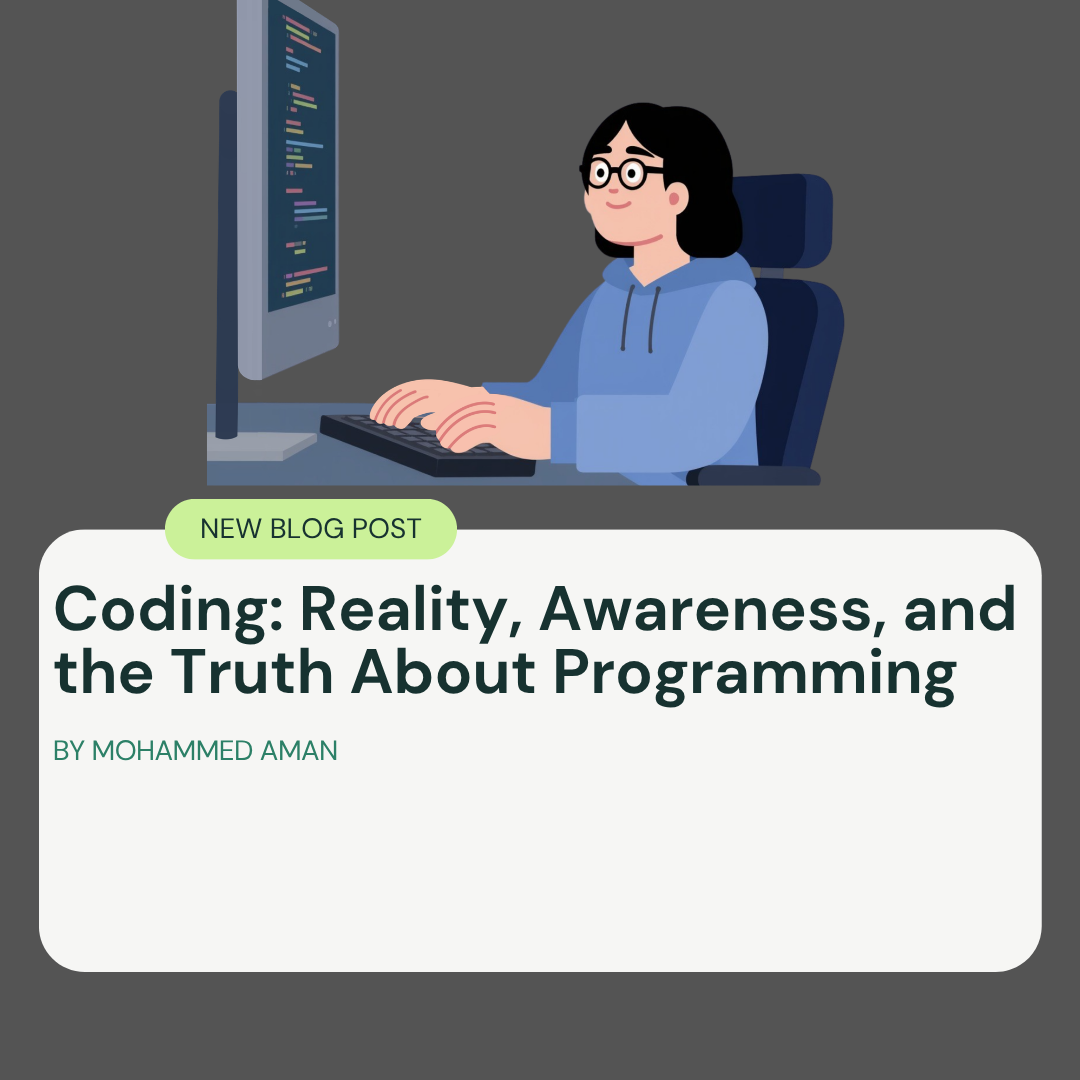
Coding is problem-solving with instructions: you tell a computer what to do, step by step, using a language it can understand. It's not about memorizing every command; professional developers constantly look things up, and the real skill is knowing what to search and how to apply it. [9][13] And it's more than typing—real coding is designing solutions, testing them, debugging, and iterating, often with other people.
Perspective shift: Think of coding less like "writing perfect lines" and more like "building and refining a process until it works."
---
Why Coding Awareness Matters Now
Digital life runs on code. From banking apps to health records, code shapes daily experiences—even if you never write a line. Coding literacy builds career resilience by helping you collaborate with engineers, automate tasks, and understand tech limits and risks. Awareness also reduces fear, misinformation, and unrealistic expectations (for example, "AI will replace all coders tomorrow" or "no-code means no skills needed").
---
The Biggest Misconceptions About Coding (and the Truth)
1) You need to be a math genius
Most day-to-day coding needs basic arithmetic and logic, not advanced math. Some fields (graphics, AI, cryptography) use heavier math—but that's specialized, not the baseline.
2) Coding is only for young people or tech companies
People start at all ages, and code is used across finance, healthcare, media, agriculture, and more. Coding is a cross-industry literacy, not a niche club.
3) It's too hard—only for geniuses
Coding is learnable with practice, like a language or instrument. [2][10] What actually helps is consistent practice, small projects, and learning to debug effectively.
You must memorize all syntax
Developers rely on docs, search, and tools. Understanding concepts matters more than rote memory. The skill that counts is knowing how to read error messages, test ideas, and break problems down.
5) Coding is boring and solitary
It's often creative, collaborative, and social—pair programming, code reviews, hackathons, open source. Coding is communication—with machines and with people.
6) You need an expensive computer or a CS degree
Free tools and browsers can get you started; many successful developers are self-taught or from non-CS backgrounds. What matters most is a portfolio, problem-solving ability, and the capacity to learn quickly.
7) Learning takes years before you can build anything
You can build small, useful projects in hours or days; mastery grows over time. [10] Start tiny, ship often, and iterate.
8) More code = better coder
Clear, simple, maintainable code is better than clever, complex code. [13] Readability, testing, and documentation beat showy tricks.
9) AI/no-code will replace coders
AI and no-code tools amplify productivity but don't remove the need for judgment, design, testing, and integration. [13][15] The role shifts toward orchestrating tools, validating outputs, and solving higher-level problems.
---
A Clear Perspective for Non-Coders
You don't have to become a developer to benefit. Understanding what code can and can't do helps you evaluate tools, timelines, and risks. Learn the vocabulary—terms like API, bug, deploy, and version control demystify conversations with tech teams. Try a tiny project: a simple script, form, or automation can change your relationship with technology.
---
A Clear Perspective for People Who Code
Beware the "hard = good" trap. Simple solutions often win in real products. Teach and document—your future self and teammates will thank you; clarity scales. Stay curious across domains; the most impactful work sits at the intersection of code + domain knowledge (health, climate, finance, etc.).
---
The Real Daily Work of Coding (a Reality Check)
Most time is spent understanding requirements, debugging, and refactoring—not just writing new features. Collaboration is central: code reviews, standups, tickets, and documentation are normal parts of the job. Tools change; principles endure. Languages and frameworks evolve, but problem decomposition, testing, and clear thinking remain core.
---
How to Start (Without Burning Out)
Pick one small goal: automate a task, build a tiny webpage, or analyze a dataset you care about. Practice in short, consistent sessions—20–30 minutes a few times a week beats sporadic marathons. Learn by building, not just watching. Projects create context; context makes concepts stick.
---
Myth vs Reality (Quick Reference)
| Myth | Reality |
|---|---|
| You must be great at math | Most coding needs logic and basic math; advanced math is specialized
| Only young people can learn | Adults learn successfully; it's a skill built with practice
| Coding is solitary | Collaboration, reviews, and communities are central
| You need a CS degree | Many paths exist; portfolios and problem-solving matter
| AI/no-code replaces coders | Tools augment; judgment, design, and integration remain human.
Leave a Reply
Share your thoughts about this article.

Mohammed Aman
Tech blogger covering AI, coding, and the future of software. Founder of CodeWithBeast.


More Articles

From Zero to Full-Stack Developer: The Complete 2025 Roadmap
A complete, honest roadmap for becoming a full-stack developer in 2025. No fluff — just the exact se...

Clean Code: 15 Principles Every Developer Must Follow
Clean code is not about clever tricks — it is about clarity. Code is read 10 times more than it is w...
Never Miss a Tech Article
Join thousands of developers getting the latest AI, coding, and tech tutorials delivered to their inbox every week.
CodeWithBeast is your hub for AI, coding, and the latest in tech. Empowering developers, creators, and learners worldwide.
© 2026 CodeWithBeast. All Rights Reserved.