


Our Social Network
Machine Learning in 2026: Why Agentic AI Is the Fastest-Growing Trend
 18 July 2026
 8 min read
Machine Learning in 2026: Why Agentic AI Is the Fastest-Growing Trend
Machine learning in 2026 is being reshaped by agentic AI, where intelligent systems can plan, act, and complete multi-step tasks with less human intervention. This article explains why agentic AI is the fastest-growing trend and how it is changing enterprise automation, workflows, and the future of machine learning.
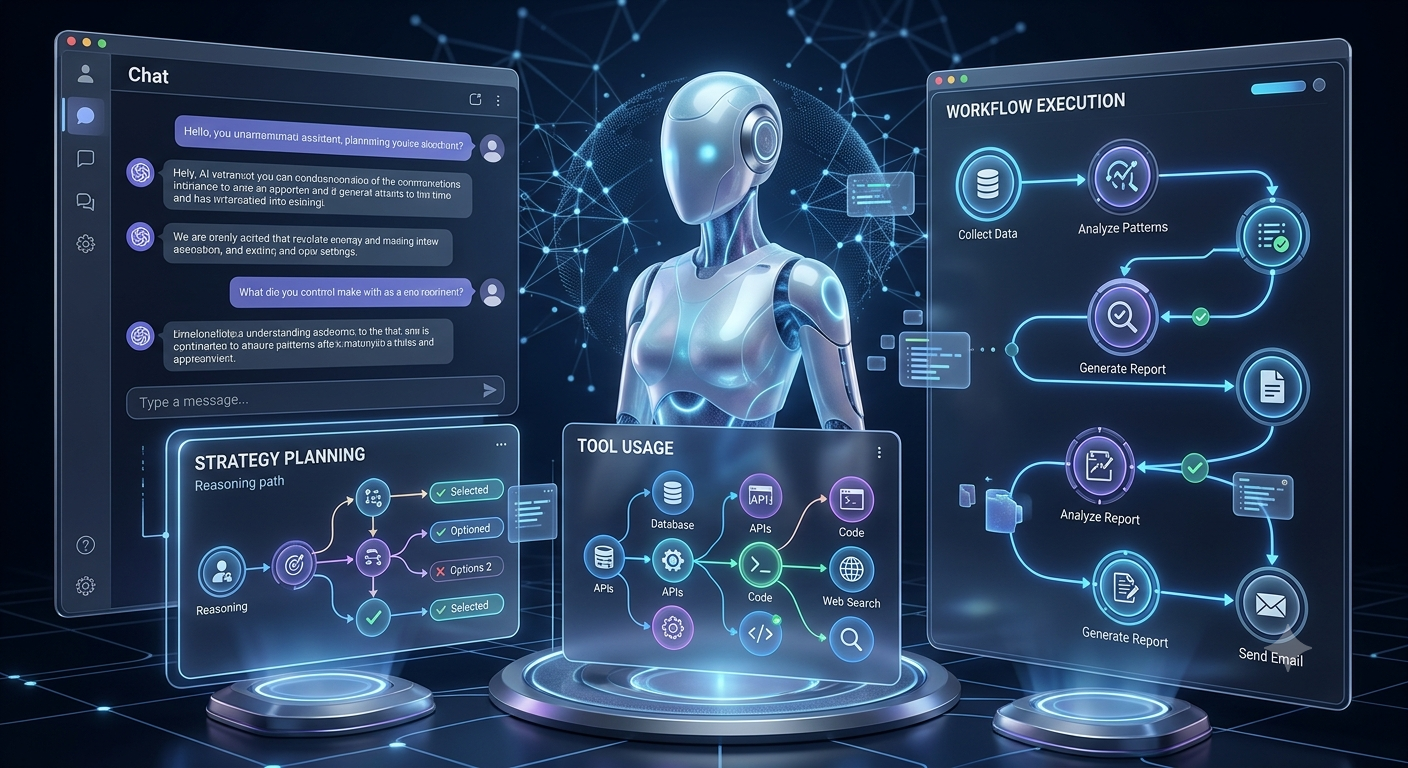
Machine learning has moved far beyond simple prediction models and recommendation engines. In 2026, one of the biggest shifts is the rise of agentic AI, a new generation of machine learning systems that can make decisions, use tools, follow goals, and complete tasks across multiple steps. This is why agentic AI is becoming the fastest-growing trend in machine learning.
What makes this trend important is not only the technology itself but also the way businesses are adopting it. Companies no longer want models that only answer questions; they want systems that can take action, connect with software tools, manage workflows, and reduce manual work. That demand is pushing agentic AI from experimentation into real-world production faster than many expected.
## What Agentic AI Means
Agentic AI refers to machine learning systems that behave more like digital workers than static tools. Instead of waiting for one prompt and giving one response, these systems can plan a sequence of actions, use external tools, evaluate results, and continue toward a goal with limited supervision.
This is a major step forward for machine learning because it adds autonomy. A traditional model might classify data or generate text, but an agentic system can break a problem into smaller steps, decide what to do next, and adjust its behavior based on feedback. That makes it far more useful in complex business environments.
## Why It Is Growing So Fast
Agentic AI is growing quickly because it solves a real business problem: too much work still depends on repetitive, time-consuming human effort. Many organizations want machine learning systems that do more than provide insights. They want systems that actually execute tasks, coordinate workflows, and reduce operational friction.
Another reason for its rapid growth is the improvement in foundation models, tool integration, orchestration frameworks, and enterprise deployment methods. These pieces now fit together much better than they did in earlier years. As a result, agentic AI is no longer just a research idea; it is becoming a practical automation layer for modern businesses.
## From Prediction to Action
For many years, machine learning focused mostly on prediction. Systems could forecast sales, detect fraud, recommend products, or recognize images. Those use cases were useful, but they still depended heavily on humans to interpret results and take action.
Agentic AI changes that pattern. The system can not only identify a problem but also take the next step. For example, it can detect an issue, gather more information, choose a response, execute part of the workflow, and report the outcome. This shift from passive prediction to active execution is one of the biggest reasons the trend is booming.
## Multi-Step Workflows
A major strength of agentic AI is its ability to handle multi-step workflows. Many real business tasks are not simple one-step actions. They involve gathering data, checking conditions, comparing options, taking action, and verifying results.
Agentic systems are designed for this kind of complexity. They can act as coordinators that manage different sub-tasks in sequence or in parallel. This makes them especially valuable in areas like customer support, IT operations, finance, logistics, and software development, where a single task may require many connected decisions.
## Multi-Agent Systems
Another important part of the trend is multi-agent orchestration. Instead of relying on one large AI system to do everything, businesses are increasingly using teams of specialized agents. One agent may collect data, another may analyze it, another may draft a response, and another may verify the result.
This structure is powerful because it mirrors how human teams work. Different agents can specialize in different tasks, which often leads to better reliability and easier maintenance. In 2026, many organizations are moving toward this model because it scales better than forcing one system to handle every responsibility alone.
## Enterprise Adoption
The biggest driver of growth in agentic AI is enterprise adoption. Businesses are under pressure to improve productivity, reduce costs, and respond faster to changing conditions. Agentic systems offer a way to automate work that previously required constant human supervision.
This is especially attractive for large organizations with repetitive workflows. Customer service, IT support, procurement, scheduling, compliance, and internal operations are all areas where agentic AI can save time and reduce delay. As more companies see measurable returns, adoption is moving from pilots to production.
## Why Businesses Want It
Businesses are interested in agentic AI because it can improve speed, consistency, and efficiency. In many workplaces, employees spend too much time on routine tasks such as finding information, routing requests, updating systems, and following standard procedures. Agentic AI can take over much of that repetitive work.
This does not mean people become unnecessary. Instead, people focus more on supervision, exceptions, strategy, and creative judgment. That makes machine learning more practical for organizations because it supports workers instead of only acting as a back-end analytics tool.
## Customer Service Use Cases
One of the clearest use cases for agentic AI is customer service. Traditional chatbots can answer basic questions, but they often struggle with complex cases that require account checks, multiple system actions, or context across several interactions.
Agentic AI can do more. It can understand the issue, retrieve relevant records, trigger actions in support systems, and follow up until the task is resolved or escalated. This makes customer service faster and more useful while lowering the workload on human agents.
## Software and IT Operations
Agentic AI is also growing quickly in software engineering and IT operations. In these areas, it can help with debugging, code generation, system monitoring, incident response, and workflow automation. These tasks are ideal for machine learning because they involve structured steps, clear rules, and repeatable decisions.
In IT operations, an agent can detect an issue, diagnose the likely cause, suggest a fix, and sometimes carry out the repair automatically. In software development, agents can assist with test generation, documentation, code refactoring, and review support. This is one reason many technical teams are paying close attention to the trend.
## Finance and Risk Management
Finance is another area where agentic AI is gaining ground. Machine learning has long been used for fraud detection, credit scoring, and market analysis, but agentic systems take those use cases further by supporting action, not just insight.
For example, an agentic system can flag suspicious activity, pause a transaction, route the case for review, and update internal systems. It can also support reconciliation, compliance checks, and reporting workflows. Because finance requires both speed and accuracy, the ability to automate multi-step processes is especially valuable.
## Supply Chain and Operations
Supply chain management is naturally suited to agentic AI because it depends on many linked decisions. Inventory changes, delays, price shifts, and supplier issues all affect one another. A static model may predict a problem, but an agentic system can respond in real time.
This means it can recommend actions, coordinate follow-up tasks, and help keep operations moving. In manufacturing and logistics, that kind of automation can reduce downtime, improve efficiency, and make systems more resilient. As supply chains become more dynamic, agentic AI becomes even more attractive.
## The Role of Context
One reason agentic AI is so important is that it relies heavily on context. A good agent does not just process one prompt in isolation. It keeps track of goals, memory, tools, outputs, and the current state of the task.
This context awareness is what allows it to behave more intelligently than older machine learning workflows. Instead of treating each request as a separate event, it can maintain continuity across steps. That creates a more natural and more useful form of automation.
## Benefits for Machine Learning Teams
For machine learning teams, agentic AI opens up new opportunities and new responsibilities. On the positive side, it makes it easier to build systems that solve real problems end-to-end. Teams can design workflows instead of only training standalone models.
At the same time, the complexity goes up. Teams must think about orchestration, memory, monitoring, tool access, error handling, and safety. That means the future of machine learning is not just about better models, but also about better system design.
## Challenges and Risks
Even though agentic AI is growing fast, it is not simple to deploy safely. One major challenge is reliability. If an agent makes the wrong decision at the wrong time, the consequences can be serious, especially in sensitive areas like finance or healthcare.
Another challenge is governance. Businesses need clear rules about what an agent can do, when it needs human approval, and how its actions are reviewed. There are also concerns around hallucination, tool misuse, security exposure, and accountability. These risks mean that agentic AI must be managed carefully, not adopted blindly.
## Human Oversight Still Matters
Despite the rise of autonomous systems, human oversight remains essential. The best agentic AI systems are not fully uncontrolled; they are supervised, constrained, and monitored. Humans still need to define goals, handle edge cases, and approve high-risk actions.
This creates a more balanced model of machine learning adoption. The machine does the repetitive, structured, and high-volume work, while people guide strategy and handle judgment-heavy situations. That combination is one reason agentic AI is viewed as practical rather than purely futuristic.
## What Comes Next
The future of machine learning will likely be shaped by more specialized agents, better orchestration, stronger tool integration, and improved safety frameworks. Businesses will expect AI systems to do more than generate output. They will want systems that can work across tools, processes, and teams.
As a result, agentic AI is likely to remain one of the most important machine learning trends for years to come. It is not just a passing buzzword. It represents a deeper shift in how machine learning systems are designed, deployed, and trusted.
## Conclusion
Agentic AI is the fastest-growing trend in machine learning in 2026 because it turns AI from a passive assistant into an active problem solver. It brings together planning, action, tool use, and workflow automation in a way that traditional models cannot match. That makes it valuable across customer service, IT, finance, supply chain, and many other fields.
For anyone writing about machine learning this year, agentic AI is one of the strongest topics to cover. It is current, practical, business-relevant, and easy to connect with the future of intelligent systems. More importantly, it shows where machine learning is heading next: from prediction to real-world action.
Leave a Reply
Share your thoughts about this article.

Mohammed Aman
Tech blogger covering AI, coding, and the future of software. Founder of CodeWithBeast.



More Articles

Machine Learning for Beginners: Your Complete 2025 Guide
Machine learning powers everything from Netflix recommendations to self-driving cars. This complete ...

Build a RAG Application with LangChain and Python: Complete Tutorial
Retrieval-Augmented Generation (RAG) lets you build AI that answers questions from your private docu...
Never Miss a Tech Article
Join thousands of developers getting the latest AI, coding, and tech tutorials delivered to their inbox every week.
CodeWithBeast is your hub for AI, coding, and the latest in tech. Empowering developers, creators, and learners worldwide.
© 2026 CodeWithBeast. All Rights Reserved.