


Our Social Network
Open Source: The Reality, Benefits, Risks and Future of Open Technology
 25 September 2026
 8 min read
Open Source: The Reality, Benefits, Risks and Future of Open Technology
Explore the reality of open source, including its benefits, risks, licenses, security challenges, business value, maintainer concerns, and future in technology.
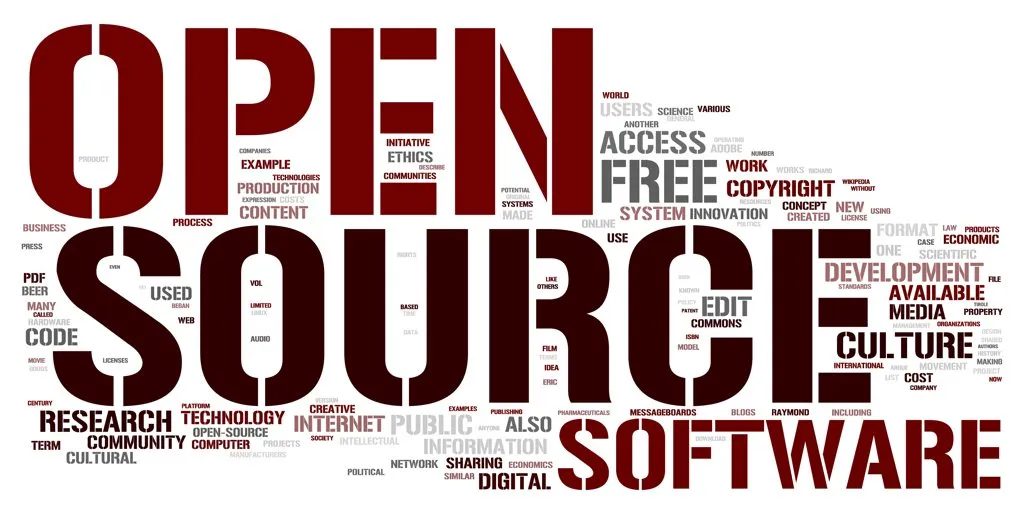
Open source has become one of the most important foundations of modern technology. It powers operating systems, websites, cloud platforms, databases, artificial intelligence tools, cybersecurity software, and developer frameworks.
Many people describe open source as free software, but that explanation is incomplete. Open source is based on public access to source code and a license that allows people to use, study, modify, and redistribute the software.
Open source has created major opportunities for developers, businesses, students, and researchers. At the same time, it has a darker side involving security vulnerabilities, abandoned projects, license problems, hidden costs, and pressure on maintainers.
Understanding both sides is essential for anyone who uses or builds technology today.
What Is Open Source?
Open source is a way of developing and distributing software in which the source code is available for inspection and reuse under specific license conditions.
Source code is the human-readable instruction set used to create software. When developers can access this code, they can examine how the software works, identify problems, suggest improvements, and adapt it for different purposes.
However, code being visible online does not automatically make it open source. A project also needs a license that explains what users are legally allowed to do.
An open source license may allow users to:
Use the software for personal or commercial purposes.
Study how the software works.
Modify the source code.
Create new software based on it.
Share the original or modified version.
Different licenses include different obligations. MIT and BSD licenses generally provide broad reuse rights, while GPL licenses include stronger requirements for sharing certain derivative works. Apache 2.0 also includes important provisions related to patents.
This is why developers and businesses should read the license before using open source code in a product.
How Open Source Development Works
Open source projects are usually managed through public repositories. These repositories may contain the software code, documentation, tests, release information, contribution guidelines, and issue trackers.
People can contribute in several ways. They may fix bugs, improve documentation, translate the interface, report security issues, test new features, or submit code changes.
A typical contribution begins when a developer creates a copy of the project and makes changes. The developer then submits those changes for review. Project maintainers examine the contribution, request improvements if necessary, and decide whether it should become part of the main project.
This process allows people from different countries and organizations to work on the same technology. Some projects are managed by independent communities, while others are supported by companies, universities, nonprofit foundations, or a combination of these groups.
Open source development encourages collaboration, but it still requires leadership. Without active maintainers, clear governance, testing, documentation, and security processes, a project can become unreliable.
Why Open Source Is Becoming Useful
Open source is becoming more useful because it gives organizations access to reusable technology without requiring them to build every component from the beginning.
A startup can use an open source database, web framework, cloud tool, or machine learning library and focus its resources on its own product. A university can study and modify research software. A government agency can use software that can be inspected and adapted to its requirements.
Faster Innovation
Developers can build on existing tools instead of repeating work that has already been completed. This reduces development time and makes experimentation easier.
Greater Flexibility
Organizations can modify open source software when the original version does not meet their needs. They are not always required to wait for a vendor to add a feature.
Lower Licensing Expenses
Many open source projects can be used without traditional license fees. This can help students, startups, small businesses, and independent developers.
However, open source is not always free in the broader sense. Organizations may still pay for hosting, support, security, maintenance, customization, training, and compliance.
Transparency
Public source code allows developers and security researchers to examine the technology. This can help users understand how software handles data and processes information.
Transparency can improve trust, but it does not guarantee that software is secure. A project still needs responsible maintenance and regular security updates.
Reduced Vendor Lock-In
Open source can reduce dependence on one vendor. Organizations may have more control over their infrastructure and can sometimes move the software to another provider.
This advantage is not automatic. A company can still become dependent on a particular vendor’s hosted service, support system, or proprietary extensions.
Education and Skill Development
Open source gives students and developers access to real-world projects. They can study production code, participate in discussions, fix documentation, and learn collaborative development practices.
For technology professionals, contributing to open source can also demonstrate practical experience in software engineering, cybersecurity, cloud computing, or machine learning.
The Dark Side of Open Source
Open source provides major advantages, but it also creates risks that users cannot ignore.
Security Vulnerabilities
Open source software can contain vulnerabilities, and popular components may be used by thousands of applications. A single security flaw can therefore affect a large number of businesses.
Attackers may target package repositories and development pipelines. They can upload malicious packages, compromise a maintainer account, create packages with names similar to legitimate libraries, or inject harmful code into build systems.
This is known as a software supply-chain risk. The risk becomes greater when applications use many third-party dependencies without properly monitoring them.
Dependency Overload
Modern applications often depend on hundreds or thousands of external packages. Some dependencies are direct, while others are added indirectly by frameworks and libraries.
This creates a problem because developers may not know every component included in their application. An outdated indirect dependency can introduce a vulnerability even when the main application code appears secure.
Abandoned Projects
Some open source projects are maintained by one person or a very small team. A project may become widely used without receiving enough financial or technical support.
If the maintainer stops working on it, the software may no longer receive security patches or compatibility updates. Businesses that depend on the project may then face unexpected replacement or migration costs.
Maintainer Burnout
Maintainers often handle bug reports, feature requests, documentation, security disclosures, release management, and community disagreements. Much of this work is unpaid.
The technology industry may depend on a small number of maintainers while providing them with limited financial support. This creates a sustainability problem for the entire open source ecosystem.
License and Compliance Problems
Using open source code without understanding its license can create legal and business risks. Organizations may fail to include required notices, publish source code when required, or comply with rules related to redistribution.
A project can also include multiple dependencies with different license requirements. Businesses should maintain a software inventory and review licenses before releasing a product.
Hidden Operational Costs
Open source may reduce software licensing costs, but organizations still need people to install, configure, update, secure, and maintain it.
A business may need to pay for:
Cloud infrastructure.
Technical support.
Security monitoring.
Custom development.
Data storage.
Employee training.
Compliance management.
Backup and recovery systems.
The total cost of ownership is often more important than the initial purchase price.
Using Open Source Safely
Organizations should treat open source software as part of their supply chain rather than as risk-free code downloaded from the internet.
A responsible security process should include:
Maintaining an inventory of all open source components.
Tracking direct and indirect dependencies.
Updating vulnerable packages quickly.
Pinning dependencies to trusted versions.
Checking package integrity and release signatures.
Generating a software bill of materials, or SBOM.
Reviewing licenses before distribution.
Protecting developer accounts and CI/CD pipelines.
Removing unused or abandoned packages.
Monitoring projects for security and maintenance activity.
An SBOM provides a machine-readable inventory of the components inside a software product. It can help security teams identify affected applications when a vulnerability is discovered.
No single security tool is enough. Dependency scanning, code review, signed releases, secure build systems, and human oversight must work together.
Organizations should also assess the health of a project before adopting it. Important signals include recent releases, active maintainers, responsive issue discussions, clear documentation, security practices, and a well-defined license.
Open Source and Artificial Intelligence
Open source is playing an important role in artificial intelligence, but the term “open source AI” can be confusing.
An AI project may release its source code but keep its model weights private. Another project may release model weights but provide limited information about its training data. Some projects also place restrictions on commercial use or particular applications.
Before adopting an AI project, users should ask:
Is the source code available?
Are the model weights accessible?
Can the model be modified?
Is commercial use allowed?
Can the model be redistributed?
Are the training datasets documented?
Are the license terms clear?
Are safety restrictions included?
AI coding tools may also increase open source risks by recommending outdated libraries, incorrect package names, or vulnerable dependencies. Faster development must be supported by stronger review and security controls.
The future of AI will require greater clarity about what is actually open. Code, model weights, datasets, documentation, and usage rights should be evaluated separately rather than treated as one package.
Open Source Compared With Proprietary Software
| Factor | Open source | Proprietary software |
Source code Available under a license Usually controlled by the vendor
Customization Often extensive Usually limited
Cost model May reduce license fees Often subscription or license-based
Support Community, commercial, or both Usually vendor-supported
Security responsibility Shared by users and maintainers Primarily vendor-led, but users remain responsible |
Vendor lock-in Can be lower May be higher
Updates Community or project dependent Controlled by the vendor
Legal obligations License-specific Vendor contract-specific
The choice should not be ideological. Organizations should choose based on security, support, compliance, cost, flexibility, integration, and long-term sustainability.
Why Businesses Choose Open Source
Despite the risks, open source remains highly attractive to businesses because it enables them to move quickly and control more of their technology stack.
Companies use open source to:
Build cloud platforms.
Develop artificial intelligence products.
Create cybersecurity systems.
Operate websites and databases.
Automate DevOps workflows.
Process scientific data.
Develop mobile and web applications.
Reduce dependence on proprietary vendors.
Open source also creates commercial opportunities. Companies can build businesses around hosting, support, consulting, managed services, enterprise distributions, training, and specialized development.
In many cases, open source software becomes the foundation, while the business earns revenue from reliability, usability, security, and professional service.
The Future of Open Source
Open source will continue to support cloud computing, cybersecurity, artificial intelligence, databases, robotics, scientific research, and software development.
The next stage will focus heavily on security and sustainability. Organizations will demand better dependency tracking, signed releases, build provenance, software bills of materials, and automated project-risk assessments.
Corporate participation will also increase. Large technology companies depend on open source infrastructure and will continue to contribute code, funding, tools, and services. At the same time, the community will need to ensure that critical projects are not controlled by only a few organizations.
The open source ecosystem will also need better funding models. Corporate sponsorships, nonprofit grants, paid maintenance, commercial support, public investment, and recurring donations may help maintainers continue their work.
AI-assisted development will create both opportunities and risks. AI can help developers write code, find bugs, improve documentation, and manage dependencies. However, it can also produce insecure code, recommend unreliable libraries, and increase the number of poorly understood components in software projects.
The future of open source will not depend only on writing more code. It will depend on creating healthier communities, improving security, respecting licenses, and ensuring that important projects can survive for the long term.
Conclusion
Open source has changed the way technology is created and shared. It gives developers access to reusable tools, encourages collaboration, reduces duplication, supports education, and helps businesses innovate faster.
However, open source is not automatically secure, cost-free, high quality, or sustainable. Vulnerable dependencies, malicious packages, license conflicts, abandoned projects, maintainer burnout, and hidden operational costs are real concerns.
The best approach is not to avoid open source, but to use it responsibly. Organizations should evaluate project health, understand licensing requirements, secure their software supply chains, track dependencies, and support the maintainers behind the tools they use.
When managed carefully, open source can remain one of the strongest foundations for the future of digital technology.
Leave a Reply
Share your thoughts about this article.

Mohammed Aman
Tech blogger covering AI, coding, and the future of software. Founder of CodeWithBeast.

More Articles

Claude AI vs ChatGPT vs Gemini: Which AI Assistant Wins in 2025?
The AI assistant landscape is more competitive than ever. Claude, ChatGPT, and Gemini each excel in ...
What is Vibe Coding? The AI Revolution Turning Everyone into a Developer
Vibe coding is the practice of building software by directing AI with natural language. Coined by An...
Top 10 Programming Languages to Learn in 2025 (Ranked by Demand)
Choosing the right programming language can make or break your career. Here are the top 10 languages...
Never Miss a Tech Article
Join thousands of developers getting the latest AI, coding, and tech tutorials delivered to their inbox every week.
CodeWithBeast is your hub for AI, coding, and the latest in tech. Empowering developers, creators, and learners worldwide.
© 2026 CodeWithBeast. All Rights Reserved.